
The honest version of a LOOBANI dog sling review has to start with what the product is not. It is not a harness, it is not a wheelchair, and it does not treat arthritis. It will not make a dog who cannot stand able to stand. What it does is narrower than that, and for me more useful. It takes some of my dog's back-end weight off her hips and off my arms for the thirty seconds it takes to climb three steps or get into the back of a car.
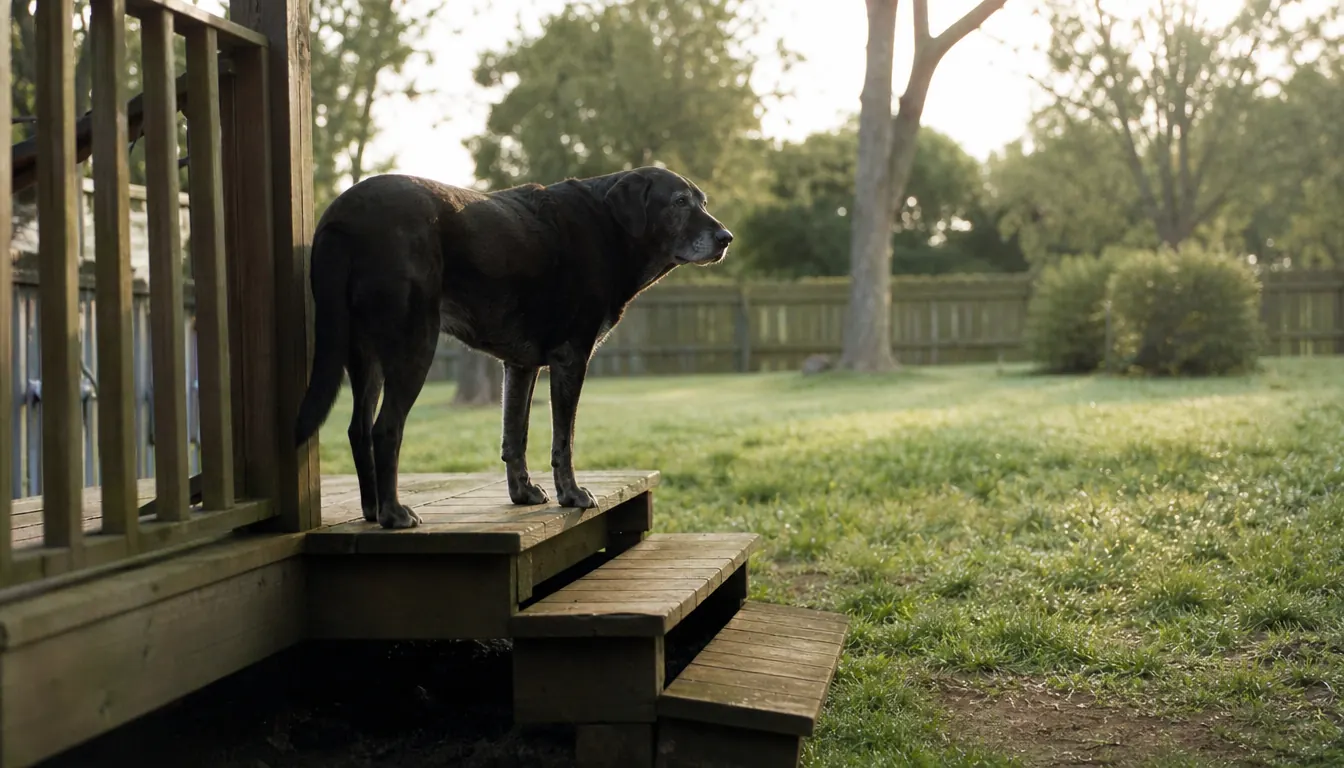
My Golden Retriever, Biscuit, is twelve. She weighs about sixty-eight pounds and was diagnosed with hip and elbow arthritis when she was ten. Most of the day she is fine. She naps, she follows me into the kitchen hoping I will drop something, and she does her two slow walks around the block. The trouble is the transitions. Getting up off the floor. The three wooden steps off our back deck here in Boise. The rear hatch of our 2019 Subaru Outback. That is where I needed a hand, and that is what I bought the LOOBANI sling to do about ten months ago.
The Quick Verdict
A plain nylon sling that does two jobs well, the deck steps and the car, and does nothing for the front half of your dog. Buy it for rear-end support on a dog who can still do most of the work.
Amazon Check Today's Price →Three Deck Steps Were the Whole Reason I Bought This
If your dog can still walk but needs a steadying hand on the stairs or at the car, this is the simplest version of that help I have found.
Amazon Check Today's Price on Amazon →How I've Used It
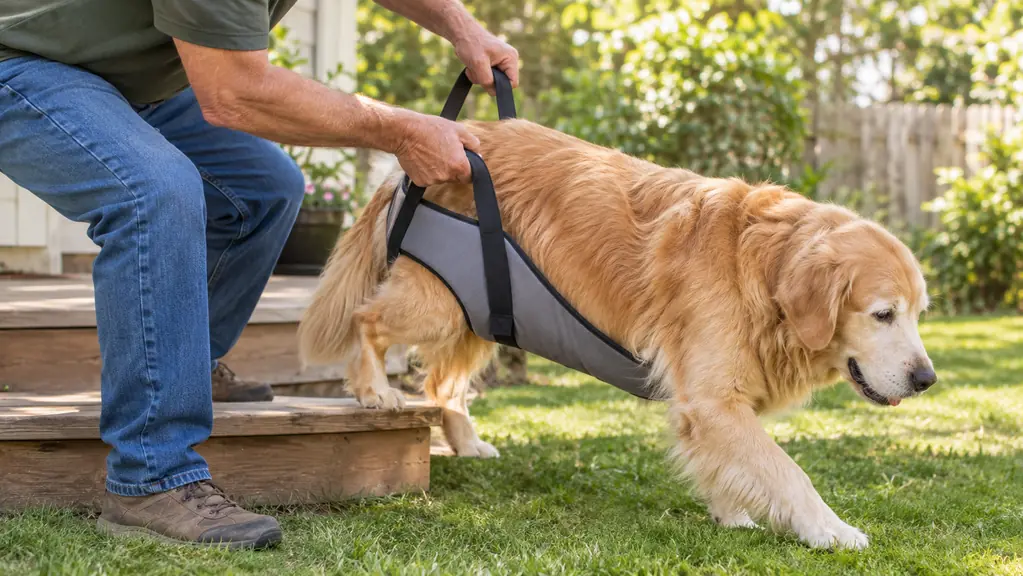
The sling lives on a hook by the back door, next to the leash. It has been there for about ten months. The routine is this. I fold it, I slide it under Biscuit just in front of her hips, I lift the straps until her back end comes level, and we go down the three wooden steps together. Then it comes off. It is not something she wears around the house, and it is not something she sleeps in.
The first week was a negotiation. Biscuit is a patient dog, but she did not care for something sliding under her belly while she was busy thinking about going outside. What worked was putting it on her in the living room, on the rug, with a piece of cheese, and then taking it straight back off. About six days of that and she stopped bracing. Now she stands still when she sees me reach for the hook, which I take as her review of the whole arrangement.
The second job is the Outback. For that I take the straps over my forearm, lift her back end, and she does the front half herself, which she can still manage. I want to be plain about this part because I think it is where people get disappointed. I am still doing work. The sling moves where the effort goes. It takes the pull off my lower back and turns it into a steady lift I can hold for a few seconds. Before I had it, getting her into the car on a bad morning left me stiff for two days.
One detail that took me a while to sort out: the height of the lift matters more than how hard I pull. My first instinct was to hoist, and that made her rear end swing. What works is a short, level hold, straps over the forearm, elbows close to my ribs, and we take the steps at her pace instead of mine. Three steps take about twenty seconds now. In March it was closer to a minute and I was sweating by the bottom. Nothing about the sling changed in that time. She got stronger at the part she still does herself, and I got better at the part I do.
Three Things the Listing Does Not Say
The first is that this is a rear-end tool and nothing else. Biscuit's elbows are as arthritic as her hips, and the sling does nothing for them. It does not support her chest, it does not steady her front, and it does not change how she places her front feet on the way down. If your dog's problem is up front, this is the wrong shape of product, and no amount of adjusting will change that.
The second is that you are still the engine. A sling is not a lift. There is no frame, nothing that carries the weight on its own. What it does is let you take that weight with your legs instead of your back, and it keeps the pressure off the dog's hips while you do. If you have a shoulder or back problem of your own, and I do, this is worth knowing before you order rather than after.
The third is that your dog has to agree to it. Some never do. Biscuit came around in about a week. A neighbor of mine has a big mixed breed who fought the whole idea for a month, and now the thing hangs in her garage. There is no technique I can hand you that replaces a willing dog. Start slow, keep the sessions to a minute, and pay in treats.
The sling did not give me a younger dog back. It gave me another year of Biscuit climbing her own deck steps, and that was the whole ask.
The Weight Range on the Label Is Worth Reading Twice
The listing gives a weight range of 15 to 30 kilograms, which works out to roughly 33 to 66 pounds. Biscuit is about 68 pounds. She is over the top of that range, and I did not notice until the box was already open on my kitchen table. It has held up fine, no seam has given out in ten months of near daily use, but I would rather you hear it from me than find it yourself. If your dog is well over 66 pounds, think about it twice. If your dog is over 90, I would be looking at something rated for that weight from the start.
What I noticed at 68 pounds is that the sling sits a touch higher on her flank than I expected, and the lift is not quite as square under her hips as I would like. That is a fit note, not a failure. The straps adjust over a good range and I found a setting that works for her, and I check it every couple of weeks because it does drift after it goes through the wash.
The whole thing weighs almost nothing, seven ounces by the package label, and the folded dimensions are roughly eight by five by four inches. I mention the numbers because they are the reason this lives on a hook instead of in a drawer. Anything bigger and it would have ended up somewhere I could not reach with a dog already halfway out the door. The storage bag it comes with is thin, honestly, more of a stuff sack, and the drawstring closure has held but I would not call it sturdy. It does the job of keeping the straps from tangling on the hook, and that is all I ask of it.
What It Does Well
It washes. That sounds small and it is not. It is nylon, it goes in the machine, and it comes out the other side and is dry by the next morning. In ten months, with a dog who has had more than a few bad days, I have washed it often enough to stop counting, and the lining has not gone flat or pilled up.
The lining is the part I did not expect to matter. Biscuit has a thick Golden coat and I was braced for rubbing under her belly. It has not happened. I still part her coat and check the skin every week, because that is what you do with an older dog, and I have not found a hot spot or a bare patch. The padding spreads pressure across a wide band instead of cutting in the way a plain strap would.
And it packs down small. It folds into the bag it came with and takes up about the room of a hardback book in the back of the car, which means it rides along to vet appointments and I do not think about it until I need it.
Where It Falls Short
It is a two-hand job on the steps. I cannot hold the leash and the sling at the same time, not with a dog who still believes there might be a squirrel at the bottom of the yard. I tried putting the leash in my teeth once and I do not recommend it. Our yard is fenced, so on the steps I simply leave the leash off, but that is a workaround rather than a solution, and I would say so to anyone with an unfenced yard.
For the car, I ended up going a different way. About eight months ago I bought a folding ramp for the Outback, and for the hatch specifically the ramp is the better tool, because Biscuit can do it herself with her front end and I do not take her weight at all. The sling still wins on the steps, where a ramp is not an option. If I could only have one for car travel, it would be the ramp.
The last thing is that it does nothing for the front end. I have said it once and I will say it again, because it is the mistake I see in review after review. People buy this expecting it to hold up the whole dog. It holds up the back half.
What I Liked
- Simple to put on once your dog accepts it, about a week for us
- Machine washable nylon that has held up to ten months of near daily use
- Padded lining has not rubbed a thick-coated dog
- Folds into the included storage bag and hangs on a hook by the door
- Adjustable straps cover a wide range of heights
Where It Falls Short
- Rear end only, no support for the chest, elbows or front legs
- Rated for 15 to 30 kilograms, so a dog at 68 pounds is already over the top
- You still carry most of the weight yourself
- Not a substitute for a ramp on car trips
- Takes two hands, so leash handling on stairs needs a workaround
Three Mistakes I Made in the First Month
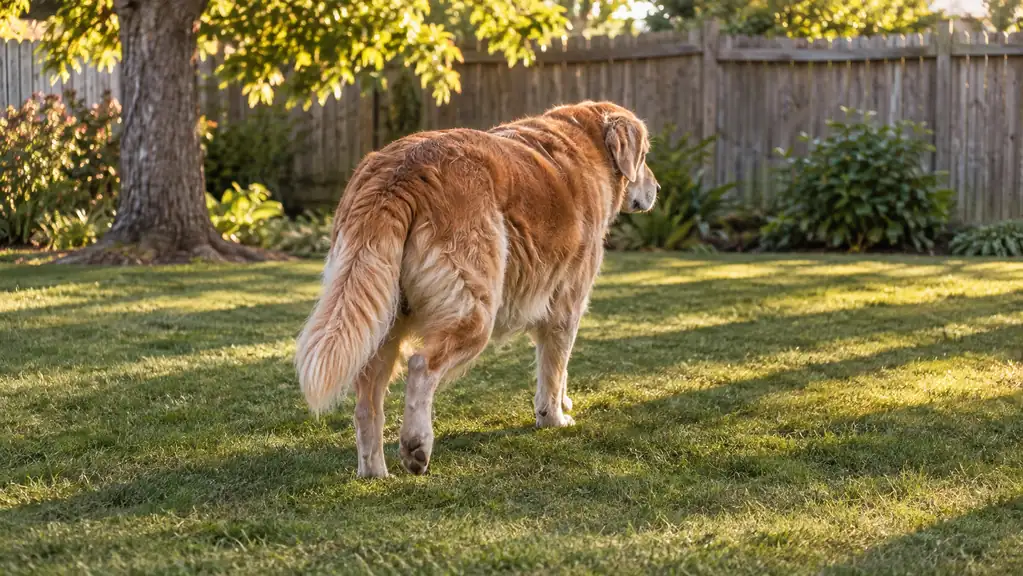
I ran it too high. My first attempts had it up near her waist, because that felt like where the weight was. The technician at our vet's office moved it down toward the top of her back legs and the difference was immediate. Biscuit stopped leaning forward. If you take one thing out of this review, take that one. It goes low, just in front of the hips, not around the middle.
I left it on too long. The first week I would put it on and then let her wander the yard with it, thinking it was doing some good. It is not a brace and it is not built to be worn. It goes on for the stairs or the car and comes off when the task is done. Our vet agreed and added that a dog should not be standing in one for long stretches.
And I tried to use it on the hardwood, which was the wrong tool entirely. Slick floors are a traction problem, not a lifting problem. What actually helped there was a pair of non-slip socks, worn indoors only, and moving her old orthopedic bed to the window so she has somewhere soft to land when her back legs wobble on the turn.
Where It Fits Alongside Everything Else
I want to be honest about the fact that this sling is one piece of a routine and not the routine itself. Biscuit has been on a joint supplement since her diagnosis, given with breakfast, and it took about six weeks before I noticed easier first steps in the morning. She has an orthopedic bed in the living room that she uses more than any of us expected. She has the socks for the hallway and the ramp for the car. The LOOBANI sling is the piece that covers the three steps and the car on the bad days, and the bad days are the ones that used to make me dread leaving the house.
If I were starting over with a dog just diagnosed, I would still buy it, but I would buy it later than I did, after the bed and the traction were sorted, because those two changed her day to day more than the sling does. The sling is for a specific fifteen seconds of the day. It just happens to be the fifteen seconds where something could go wrong.
There was a Tuesday in February I keep coming back to. Dale was at his brother's, it had iced over overnight, and the deck steps had that thin clear coat on them you cannot see until you are on it. Old me would have stood at the top of those steps for ten minutes working up the nerve, or skipped the walk entirely and cleaned up an accident an hour later. Instead I put the sling on her, held the straps, and we went down one step at a time with me testing each tread with my boot first. It took four minutes. She did her business, we came back up, and I sat on the kitchen floor afterward with my heart going. The sling did not make that morning safe on its own. It made it possible, which is a different and smaller thing, and it was enough.
Who This Is For
This is for the person with a big dog who can still do most of the work and needs a hand at the transitions. The stairs. The car. The single step up into the house. The dog who can stand but is slow, who stumbles on bad mornings, who needs a lift for half a minute and then walks out fine on the flat. That describes Biscuit, and it fits her situation well enough that I never went looking for anything else for the steps.
It is also for someone who does not want a piece of equipment parked in the hallway. This folds into a bag and hangs on a hook. No assembly, no frame to step over at night, nothing to trip on.
Who Should Skip It
If your dog cannot bear weight on the back legs at all, this will not be enough, and that is a conversation to have with your vet about a proper mobility harness or a cart rather than a sling. If the problem is the front end, this is the wrong tool. If your dog will not tolerate anything under the belly, no amount of adjustability fixes that, and you should hear it before you spend the money.
And if you are shopping mainly to get your dog in and out of a vehicle, look at a ramp first. That is the answer I would give a neighbor standing in my driveway. The sling is a good tool for the job I bought it for. It is not a universal one.
If the Deck Steps Are Your Problem, This Is What I'd Buy Again
Ten months in, it still hangs by my back door. That is the most honest recommendation I can give anything.
Amazon Check Today's Price on Amazon →