
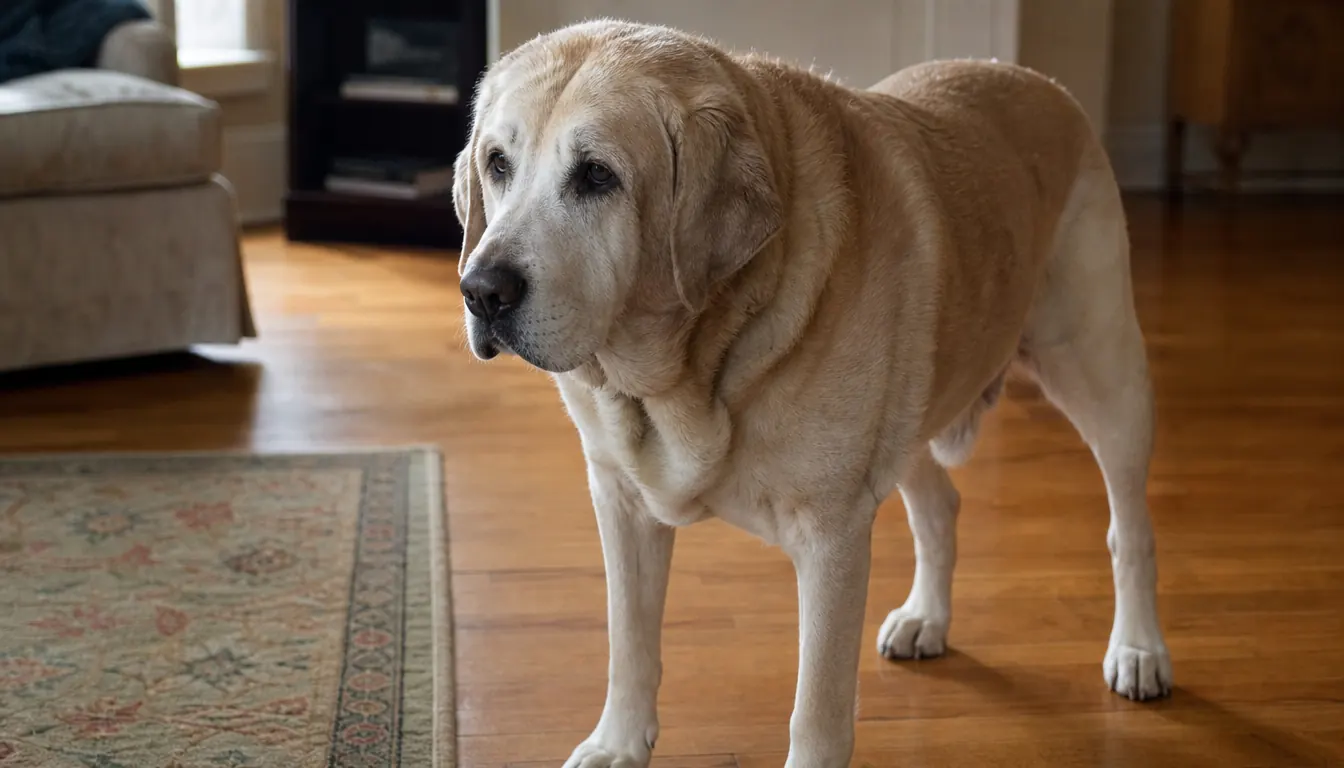
Biscuit went down in the hallway on a Tuesday morning in February, and she went down hard. Her back legs slid out from under her the way they do on a slick floor, she scrambled, and then she stood there for a second with her feet going nowhere. She is a 12-year-old Golden Retriever, about 68 pounds, and she was diagnosed with arthritis in both hips and both elbows when she was 10. I knew the hardwood was getting harder for her. That morning made it real.
I tried the obvious things first. I put down a runner rug, and the rug slid. I bought a pair of booties with rubber soles, and Biscuit walked like she was wearing someone else's shoes and then stood in the kitchen refusing to move. What finally worked was a plain pair of socks with a grip pattern on the bottom, specifically the DOK TigerToes non-slip socks, which she has worn indoors every day for about six months now. This is the order that got us there. It is not complicated, but the sequence matters, and I got the first week wrong in three different ways.
The pair that survived Biscuit's first week
Four socks to a pack, grip built into the bottom, hook and loop strap at the ankle. Six months of daily wear on our hardwood and they are still in the rotation.
Amazon Check Today's Price on Amazon →The Five Steps, in the Order That Worked
Step 1: Measure the Paw Before You Order Anything
Socks that do not fit are worse than no socks at all. Too loose and the sock rolls down into a bunched ring at the ankle within twenty steps. Too tight and you will find a red line across the top of the paw an hour later. So measure first, with the dog standing on all four feet, because a standing paw spreads out wider than a paw you are holding up in your hand. Wrap a soft tape measure around the widest part of the paw, just behind the nails, and write the number down where you will not lose it.
The large size of the DOK TigerToes is cut for paws that measure 2.5 to 2.8 inches across. That range is the whole decision. If your dog measures inside it, you have your size. If she measures well outside it, this is not the pair for her, and no amount of fussing with the strap will fix that. Biscuit measured a hair under 2.7 across her front paws, and the large fit her with room to spare on the strap.
Trim the nails before you measure, not after. A long nail pushes the tape out and lands you in the wrong size, and long nails also wear through sock fabric faster than anything else on a dog. If your dog grows thick hair between the pads, trim that back too. You want the sock sitting against the paw, not against a cushion of fur that will shift with every step she takes.
Step 2: Put Them On Before She Gets Up, Not After
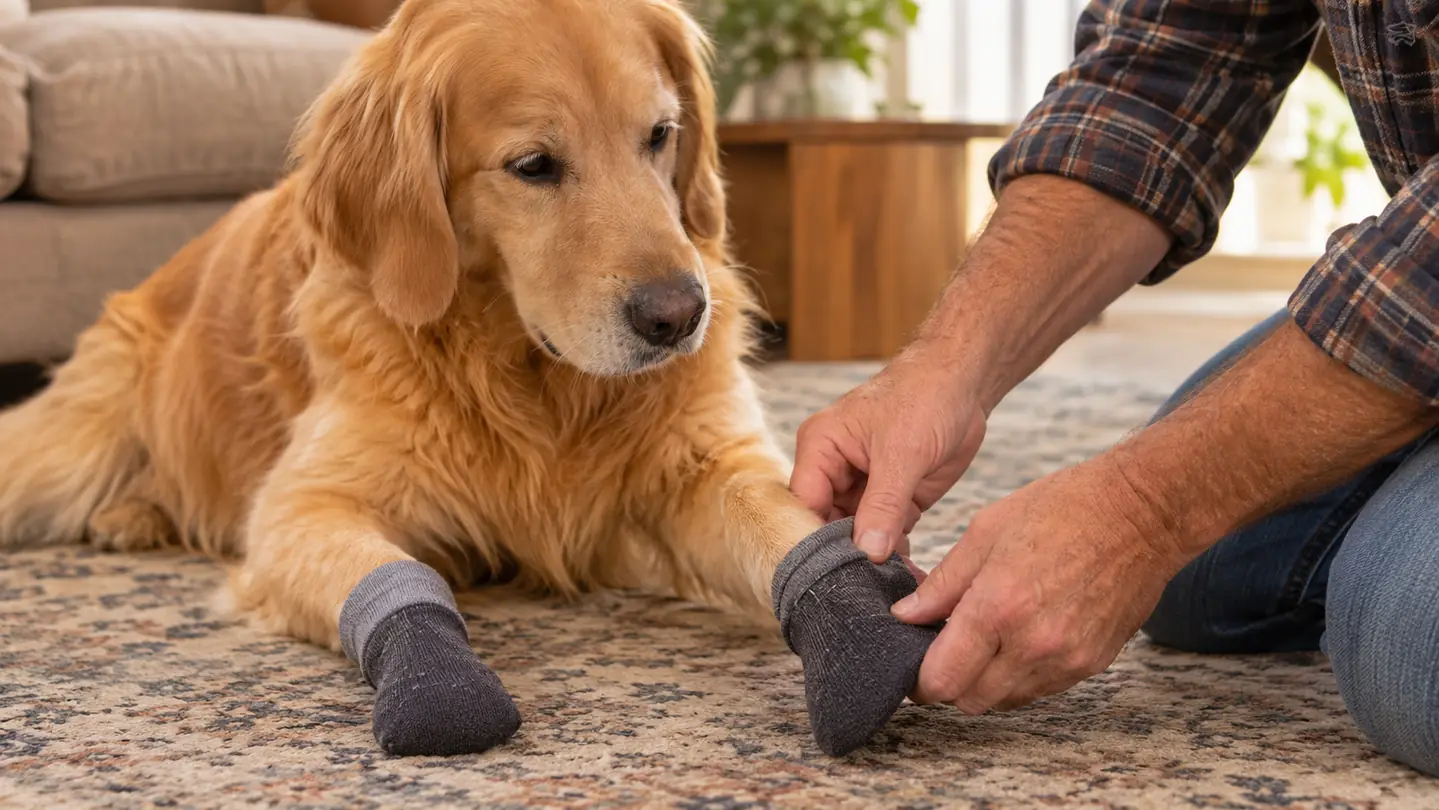
The worst two minutes of Biscuit's day are the first two minutes after she stands. That is when the back legs are stiffest and when a slip is most likely. So the socks go on while she is still lying on her bed, before her feet touch the floor. If I wait until she is up and walking, I am chasing four paws that are already sliding, and she is already anxious about the whole business.
Roll the sock over the paw instead of pulling it from the toe. Pulling stretches the opening and drags the grip sideways. Roll it down to the toes like you would put a sock on a baby, ease the paw in, then roll the cuff back up and settle it above the ankle. One paw at a time, and talk to her while you do it. Biscuit gets a small piece of something after the fourth paw, every morning, and now she lies down and waits for it.
The first week will look ridiculous. Biscuit walked with her feet coming up too high, like she was stepping over a log, and she stopped twice to stare at her own front feet. She also mouthed at them that first evening. I gave her a chew and let her be. By the fourth morning the high stepping was gone and she walked the hallway like she had always worn them. If I had quit on day two because it looked silly, I would have missed the whole point.
Pick a time of day when your dog is already calm, and do the fitting there. For us that is right after breakfast, when Biscuit is fed and drowsy and has no reason to be up on her feet. Doing it at the door while she is excited about a walk is a fight you will lose. Same socks, same paws, completely different dog depending on the minute you choose.
Step 3: Fasten the Strap Snug, Then Check It Ten Minutes Later
The strap over the ankle is the difference between a sock that stays on and a sock you find in the kitchen. These fasten with a hook and loop strap, so you set the tightness yourself. The right snugness is one finger under the strap with a little resistance. If you can slide two fingers in easily it is too loose, and the sock will rotate down as she walks. If you cannot get one finger in, it is too tight.
Check it ten minutes after you put them on, and again after her first nap of the day. Feet swell a little, straps shift a little, and ten minutes of walking tells you more than the fitting did. You are looking for the strap still sitting above the ankle rather than down on the paw, and for no red line or bare patch of skin when you take the sock off.
If she starts licking at a strap, that is information, not a behavior problem. It usually means too tight, or a fold of fabric caught underneath. Take the sock off, smooth it, put it back on and check the fit again. Biscuit went through a week of fussing at her back left sock before I realized I had been fastening that one a notch tighter than the other three.
Step 4: Let the Sock Twist, and Stop Fighting It
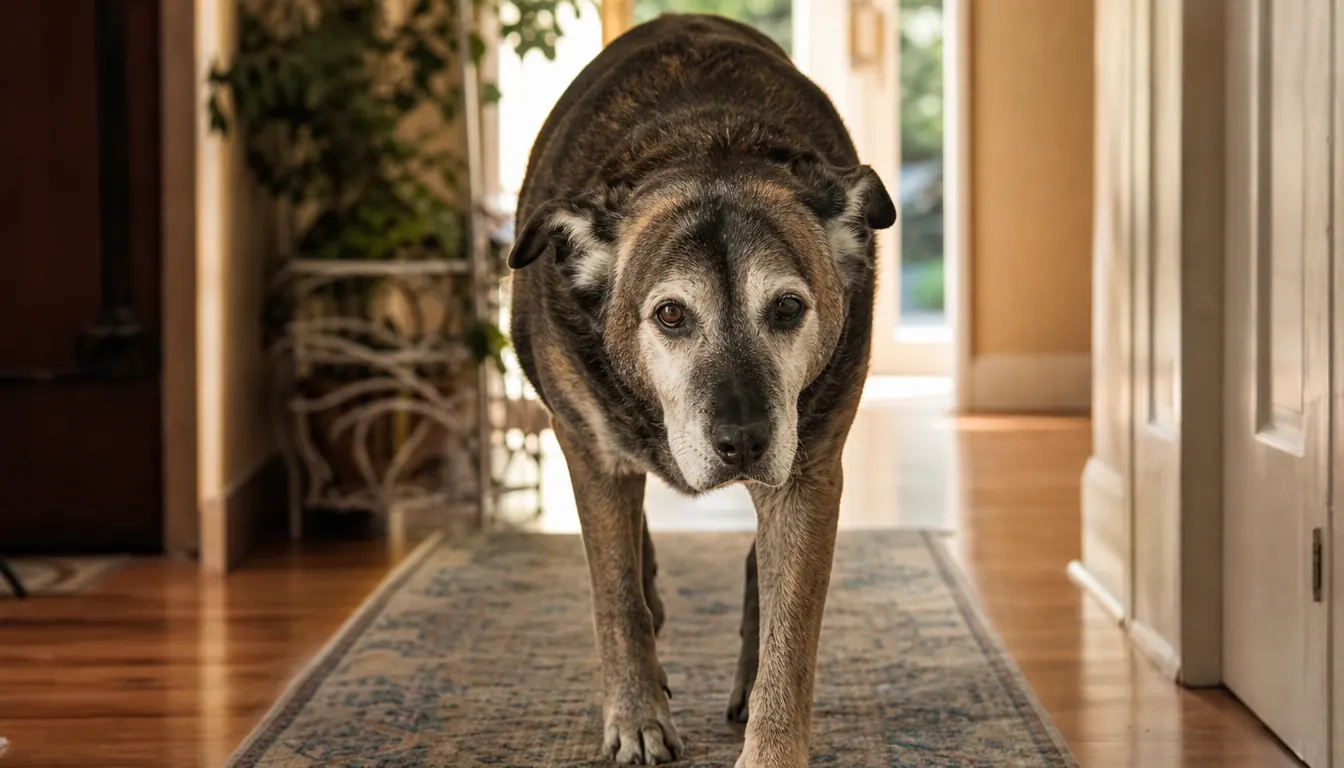
Here is the thing nobody tells you about dog socks. They rotate. A dog's paw is not shaped like a human foot, and the sock will turn on the paw as she walks, especially on a dog that drags a back foot the way Biscuit does. Most socks lose their grip the moment they twist, because the grip is a patch in one spot on the sole. The DOK socks are built so the grip still bites when the sock has turned halfway around the paw.
I spent the first two weeks straightening socks every ten minutes, and then I stopped. Unless a sock has rotated far enough that it is half off, leave it. Straighten them when she is settled for a nap, or when you check the straps, and let her walk. Constantly grabbing at her feet teaches her that the socks are something to worry about, and a worried dog walks worse, not better.
If a sock comes all the way off, do not blame the sock first. Blame the strap. Nine times out of ten it was loose. The other time it was a back paw wearing a sock that had stretched out a little, and moving that one to a front paw fixed it. Four socks, one on each paw, and you have a rotation to work with.
The reason these stayed on is unglamorous. The grip still works when she twists the sock halfway around her paw. The others lost their grip the moment they turned.
Step 5: Off at Night, in the Wash Weekly, and Keep the Nails Short
Biscuit wears her socks indoors, from after breakfast until bedtime, on the hardwood in the living room and the hallway. She does not wear them outside. They are traction for slick floors, not footwear for a walk, and a wet sock is a useless sock. On the deck steps and out in the yard she goes barefoot, and that is where the sling comes in, which I will get to.
The DOK socks come four to a pack, one for each paw, and they are machine washable, which matters more than I expected. I wash all four together once a week and let them air dry. Six months in, the same four are still in the rotation and the seams have held. The grip is not as crisp as it was on the first day, but it still does the job on our floor, and that is the honest version.
Two things you have to keep up with. First, nails. A sock cannot save a dog whose nails are clicking on the floor like tap shoes, so I keep Biscuit on a trim every few weeks. Second, the floor itself. Socks help on open hardwood, but the lip where the hallway meets the kitchen catches her toe, and a cheap runner laid over that lip did as much for her confidence as the socks did. Do both. Neither one alone is enough.
What Else Helps
One more note about the floors, because it caught me out. The two rugs I already owned were sliding, and a sliding rug is worse than bare hardwood, because the dog trusts it and then it moves under her. I put a rubber pad under both and that problem went away entirely. Ten minutes per rug and a trip to the hardware store. If you want to see what your dog is actually walking on, get down to her eye level along the path she takes every day and look at it from there. You will spot things you never noticed from standing height.
Socks solved the hardwood. They did not solve the three wooden steps down to the back deck, and they did not solve getting into the back of our 2019 Subaru Outback. For the steps I use a hind leg sling, which takes weight off her back end on the bad mornings and lets me steady her without hauling on her collar. It supports the rear legs only, and that is all it is for. There is a folding ramp in the cargo area of the Outback for vet visits, and it took Biscuit about two weeks of short sessions with treats to trust it.
The other pieces matter too. Biscuit has an orthopedic bed in the living room by the window, and she sleeps on that at night instead of the flat old pillow bed she used to have. She gets a Cosequin soft chew with breakfast, which she has been on for about eighteen months now, started at our vet's suggestion. It was not overnight and it is not a cure. She still has stiff days. But the mornings got easier after about six weeks, and I will take that.
And keep your dog's weight where your vet wants it. Every extra pound is more load on arthritic hips, and it is the one lever you actually control. Ask your vet about that, and about how much walking is right, before you change anything about how your dog gets around. I am not a vet. I am a retired dental hygienist with a bad hallway and a very good dog, and what I know is what worked in this house.
Start with the paws, not the whole floor
You do not need to re-floor a hallway. You need four socks that stay on and a routine that puts them on before her feet hit the floor. That is the entire change.
Amazon Check Today's Price on Amazon →