
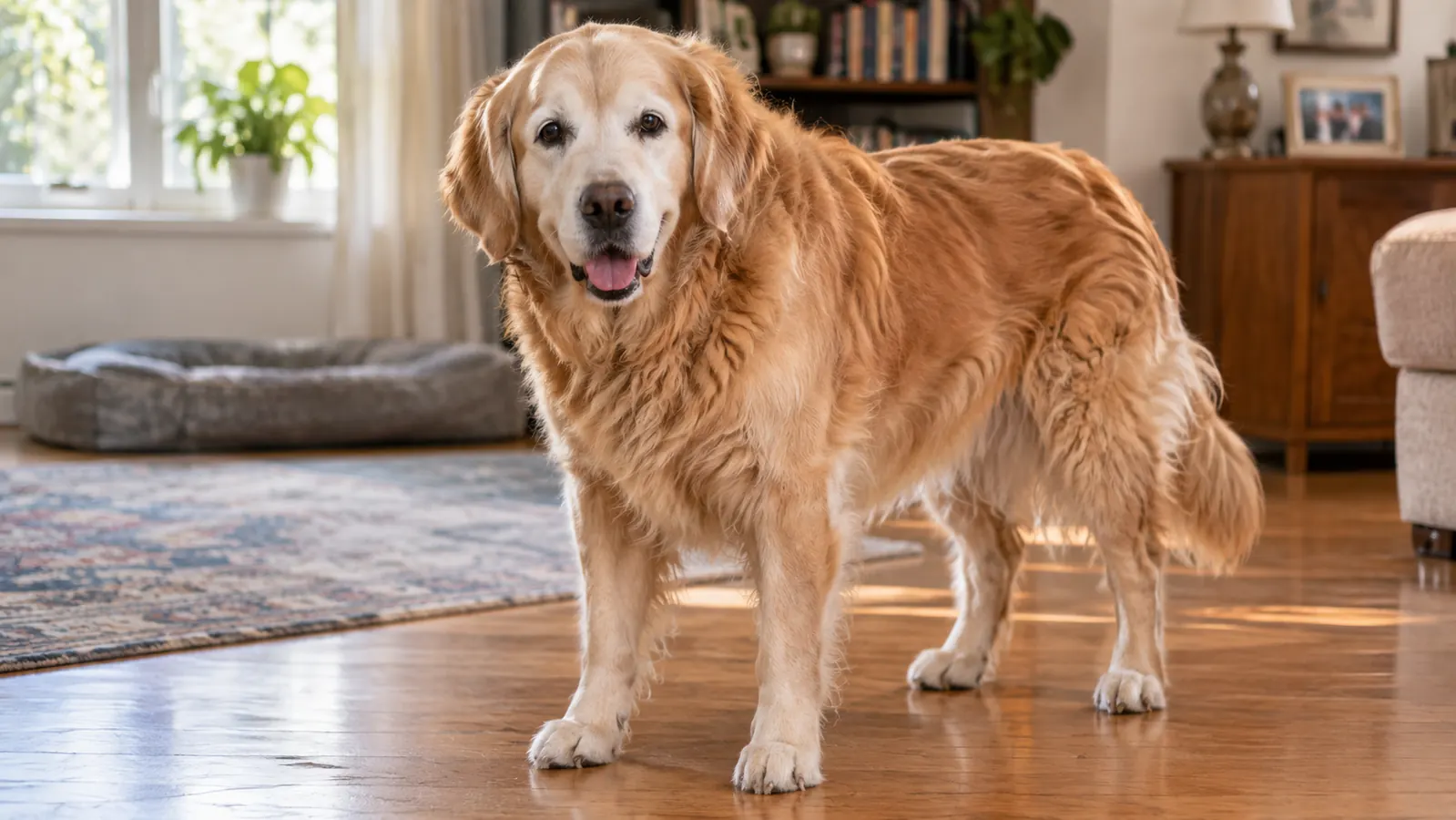
Biscuit is twelve, sixty-eight pounds, and has arthritis in her hips and elbows that our vet diagnosed when she was ten. The floors in this house are original hardwood, and I loved them for about thirty years. I stopped loving them the first time I watched her back legs slide out from under her on the way to the water bowl. That scramble, toenails clicking and then skidding, is a sound I can still hear in my head at night.
So I went looking for something to put between her paws and the floor. I tried two things seriously. DOK TigerToes socks, which she has worn indoors for about six months now, and Toe Grips, the small rubber grips that bond to the end of a dog's nails. Short version: for Biscuit, the DOK socks did more and were far easier to live with. The grips gave her a more natural feel underfoot and she never fussed about having them on, but getting them applied took a patient half hour and they have to be redone as the nail grows. If your dog will not tolerate anything wrapped around a paw, the grips are worth a look. If your dog is sliding on hardwood and licking at her pads, start with the socks.
What Each One Actually Is
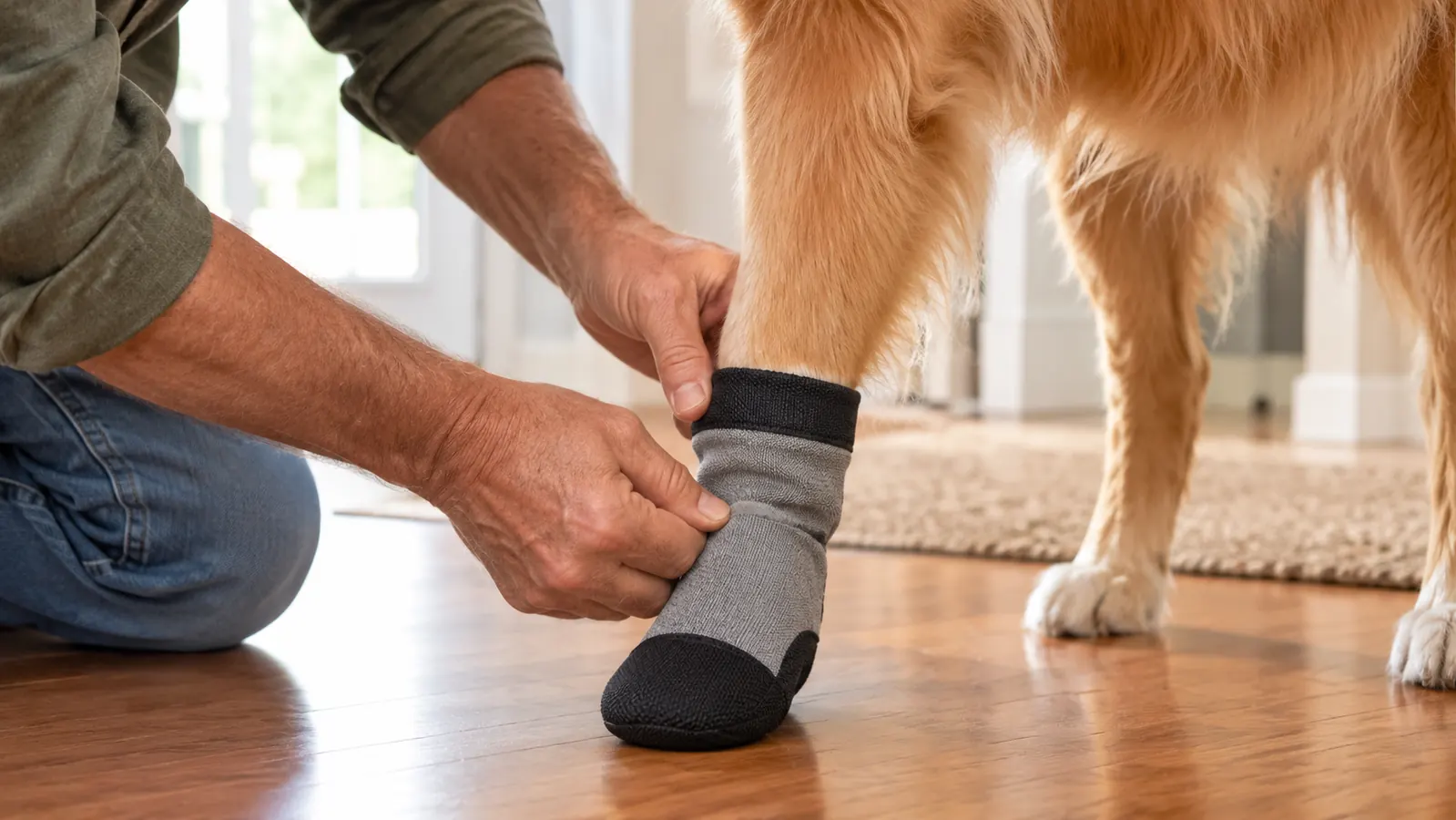
The DOK TigerToes sock is a fabric sock, cotton and nylon, that pulls over the paw and fastens with a hook and loop strap at the ankle. The set comes with four of them, one for each foot and no spare, so if you have a chewer you will want to keep them in a drawer rather than on the floor. Size Large fits a paw between 2.5 and 2.8 inches across, which is where Biscuit landed with a little room to spare. The grip is built into the sole, and it is made to keep working even when the sock twists around on the foot. Mine twist. She does not stand still while I am getting the strap done up.
Toe Grips work on a different idea. Instead of covering the paw, they put a small rubber grip on the tip of each nail and bond it there with an adhesive. The thinking is that the nail is already the part of the foot that touches the floor, so if you put the traction there you keep the dog's gait as close to normal as it can be. Nothing wraps the paw. Nothing changes how the foot spreads out when she stands up.
How I Compared Them
I am not a veterinarian and I am not going to pretend this is anything but one woman's experience in one house with one dog. What I did was simple. I put both products in front of the same problem, which is a sixty-eight pound Golden Retriever with stiff hips trying to cross a slick hallway four or five times a day, and I paid attention to what actually happened rather than what the packaging said.
The socks got six months, worn every morning and taken off every night, on the hardwood in the living room and the hallway and nowhere else. She has never worn them outside. The grips got six weeks, which was long enough. I talked to our vet before I tried either one, mostly because I wanted to know whether putting something on her feet could make her arthritis worse or cover up a problem I should be watching. Her answer was that traction inside the house was a reasonable thing to want, and that I should keep an eye on her nails and her skin either way.
Side by Side
Here is how they lined up on the four questions that mattered to me. Can I get it on her. Will she tolerate it. Does it stay where I put it. And what does it take to keep going. I have tried to be honest in the rows where the grips are simply better, because they are better at some things.
| DOK TigerToes Socks | Toe Grips | |
|---|---|---|
| How it works | A fabric sock over the whole paw with grip built into the sole | A small rubber grip bonded to the tip of each nail |
| Putting it on | Pull on, strap at the ankle, about a minute for four feet once she settled | Nail prep, adhesive, a still dog and a drying window before she walks |
| Taking it off | Unstrap and pull, seconds a foot | Comes off on its own schedule as the nail grows out |
| Dog acceptance | Two days of high stepping, then she ignored them | Nothing wraps the paw, so there is less to object to |
| Gait and feel | Fabric sits between the paw and the floor | Traction at the nail, closest to how the foot already works |
| Paw protection | Covers pads and the top of the foot, and stops the licking | Nails only, no cover for pads or skin |
| Staying put | Grip keeps working when the sock twists, strap needs a re-tighten now and then | Bonded in place until the nail grows past it |
| Upkeep | Machine wash with the towels | Wipe down and reapply as needed |
| Where it belongs | Indoors on hardwood and tile. Ours never go outside | Stays on through a normal day, inside and out |
Where DOK TigerToes Wins
The widest gap is the ninety seconds before she walks to her water bowl. The socks pull on over the paw, the strap goes down, and we are done. Taking them off is quicker still. When a dog is stiff and slow, the difference between a one minute job and a half hour job is not a small difference. It is the difference between doing it every morning and slowly stopping. That is what happened with the grips in our house. By the fourth week I was finding reasons to put it off until the afternoon, and the afternoon turned into evening, and then not at all.
The second gap is coverage. The sock is over the whole paw, pads and the top of the foot, and that turned out to matter more than I expected. Biscuit licks at her front pads when her elbows are bothering her, which the vet says is a pain thing and not a habit I can train out of her. With the socks on she leaves them alone. On the days I skipped them I would find a wet spot on a pad by two in the afternoon. Then there is the upkeep. They go in the washing machine with the towels, which is the whole of the maintenance, and at six months the same four socks are still in the basket by the door with one thin spot at a heel and no holes.
Where Toe Grips Wins
If Biscuit were a different dog, one who fought having her feet handled, the grips are what I would have reached for first. There is nothing around the paw, nothing between her and the floor, and no change to the shape of her foot when she stands. For a dog that walks well on carpet and only slides on the kitchen tile, putting the traction exactly where the foot meets the floor makes a lot of sense. It is closer to how a dog's foot already works, and I think that is why she never objected to them the way she objected to the socks for the first two days.
They also do not collect anything. No fabric to get damp, no sock to pick dog hair off of, nothing to launder and nothing to remember to take off before she goes out to the yard. On a hot afternoon in July a sock on a dog's foot is one more thing for her to be uncomfortable about, and Biscuit runs warm. I noticed it and I will not pretend I did not. So there are real reasons a person would prefer the grips, and I do not want to wave them away just because the socks won in our house.
At six months the same four socks are in the basket by the door, and Biscuit crosses the middle of the hallway instead of hugging the wall.
The four socks that got Biscuit across her own hallway
Size Large fits a paw 2.5 to 2.8 inches across, and the set comes with four, one for each paw. These are indoor socks. They are not boots and they will not survive a walk in the park.
Amazon Check Today's Price on Amazon →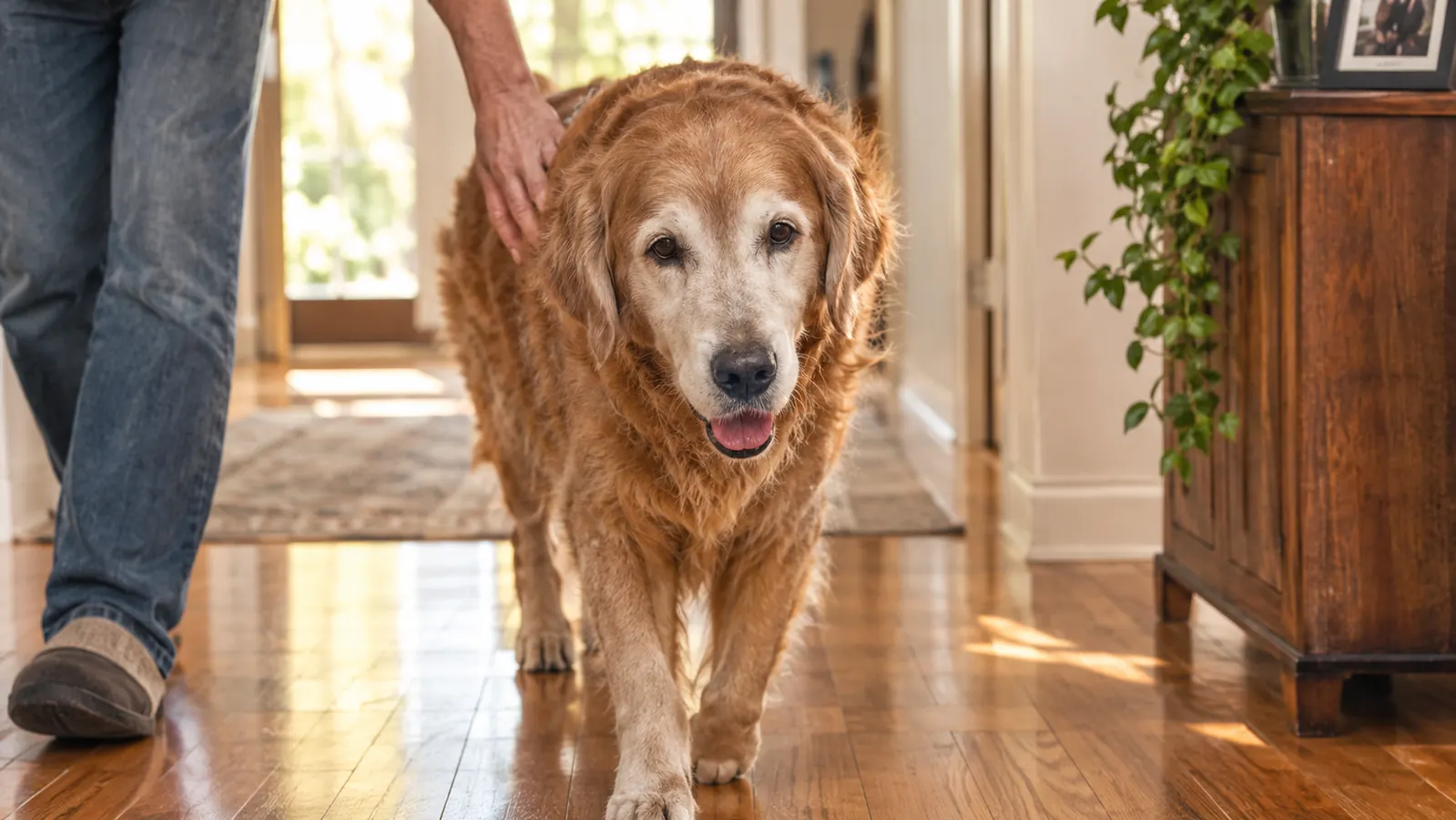
What Six Months of Socks Looked Like
The first two days were a comedy. She high stepped around the living room like the floor had turned to ice water, lifting each foot further than she needed to and giving me a look that suggested I had lost my mind. On the third day she stopped noticing. That has been the pattern ever since. She does not love them and she does not object, and when I pick one up in the morning she walks over and stands by the door.
The wear has been modest. One sock has a thin patch at the heel where she pushes off, which is where I would expect it. The straps have loosened a little with repeated pulling and I tighten them maybe once a week. They have been through the wash more times than I can count and they have not shrunk or stiffened. What I notice most is what she does now. She gets up off her bed and crosses the room without that pause where she is deciding whether it is worth the risk.
Dale noticed before I did. He came in from the garage one evening and said she was walking different, and I had stopped seeing it because I watch her every day. What he was seeing was the absence of the pause. She used to stand at the edge of the hardwood and think about it before she committed. Now she just goes. That is a small thing to write down and a large thing to live next to for a year.
The Part Nobody Warns You About
The socks are an indoor thing and you have to be disciplined about it. Biscuit wears them on the hardwood and nowhere else. If she goes out to the yard in them they come back wet and gritted and I have a washing machine to run. If I forget to take them off before bed she will chew at the strap. And they do not fix anything. Her arthritis is still there. The stiff mornings are still there. I still use the sling on the back steps on a bad day and she still takes her time getting into the car. What the socks bought her was confidence on the floor, not a cure.
With the grips, the thing I did not expect was how much the application asks of you and the dog. It needs nail prep, an adhesive, and a dog who will hold still through all of it, and it is not a job to start twenty minutes before you have to leave the house. Then there is the smallness of them. A grip that comes off in the yard is a grip you may not find, and it comes off on its own schedule as the nail grows, not yours. None of that makes them a bad product. It makes them a product that wants a patient owner and a dog who is not already worn out by being handled.
Before You Buy Either One
Before either product, I did the free things. I had her nails trimmed, because a long nail lifts the paw off the floor and makes the slide worse, and the technician showed me what a proper length looks like on her. I put a long runner down the worst stretch of the hallway. I moved her water bowl off the slick floor and onto the rug by the back door. None of that was a fix on its own. All of it together moved the needle enough that I noticed.
So if you are at the beginning of this, start there. Trim the nails. Cover the worst stretch of floor. Watch how she gets up and where she hesitates. Then decide whether you are solving a slipping problem or a pain problem, because socks and grips both address slipping and neither one touches pain. That part is a conversation with your vet, not a purchase.
Who Should Buy Which
Buy the DOK socks if your dog is slipping on hardwood or tile inside the house, if she licks at her pads, and if you want something you can put on and take off in seconds on a morning when everything already takes longer than it used to. Buy them if your dog tolerates having her feet touched, which Biscuit does, mostly because I spent twelve years wiping mud off them after every walk. If your dog snaps when you touch a paw, do not start here.
Look at Toe Grips if your dog will not tolerate anything around the paw, if the slipping is mainly on one hard surface and you want the traction at the nail, or if you have the patience for the application and the reapplication. And whichever way you go, talk to your vet first. Slipping can be arthritis, it can be nails that need a trim, it can be a neurologic thing, and no sock on the market will tell you which one you are looking at. In our case it was arthritis, we already knew that, and traction was one more small thing on a long list that helps.
Start with the hallway she walks twenty times a day
Four socks, machine washable, sized for a paw 2.5 to 2.8 inches across. Six months in, Biscuit still wears hers every morning. Talk to your vet about the arthritis itself.
Amazon Check Today's Price on Amazon →