
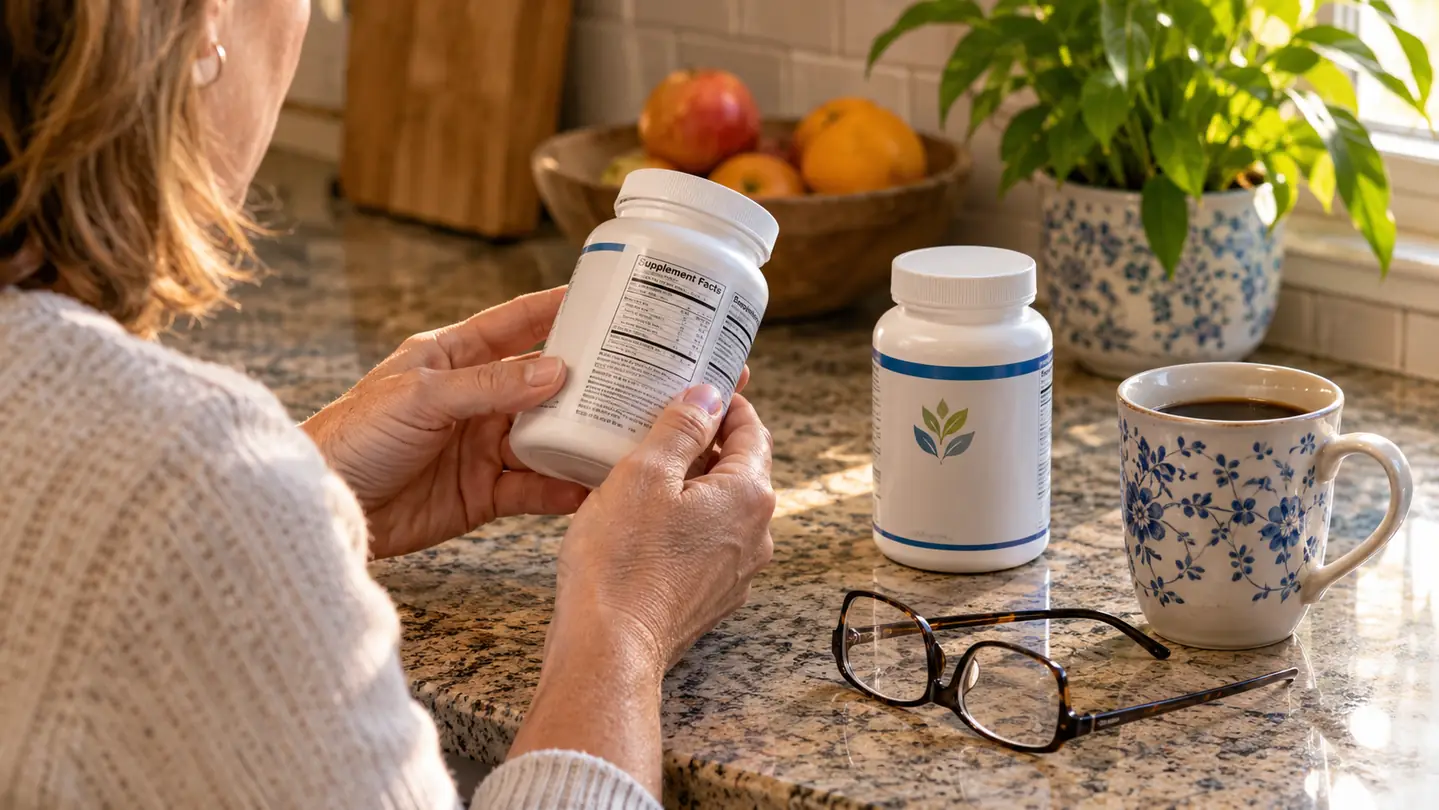
A neighbor stopped at the end of my driveway last month and asked me straight out: if the store brand has glucosamine on the label too, why am I still buying Cosequin? I did not have a tidy answer ready. So I went home and did the homework. I read both labels with my reading glasses on and the kitchen light over my shoulder. I called our vet's office and asked the technician what she actually thought. I bought a container of the warehouse-club glucosamine chew, set it on the counter next to Biscuit's bag, and went line by line.
Here is the short answer. The glucosamine in one is the same molecule as the glucosamine in the other. What you are buying with Cosequin, made by Nutramax Laboratories, is the testing behind the raw ingredient, the specific ingredients named on the panel, and directions written for a dog Biscuit's size. She is a 12-year-old Golden, 68 pounds, with arthritis in both hips and both elbows, diagnosed when she was 10. For her, that difference was worth it. For a younger dog, or for an owner still trying to find out whether glucosamine does anything at all, a generic chew is a fair place to start, as long as you know what you are giving up.
The label read itself took a whole Tuesday morning, and I want to describe it because the process is the argument. I got out Dale's old kitchen scale, weighed one Cosequin soft chew and one of the warehouse-club chews, and wrote both numbers on the back of an envelope. The Cosequin bag is 10.2 ounces by the listing, 60 soft chews to the bag, and I counted them twice because I did not believe it the first time. Then I sat at the counter with a legal pad and copied the panels word for word, in two columns, the way I used to take notes at the dental office. By the time I finished, the difference was not a mystery anymore. It was a list.
| Cosequin Soft Chews | Generic Glucosamine Chew | |
|---|---|---|
| What the label names | Glucosamine hydrochloride and sodium chondroitin sulfate, each with a company designation printed beside it | Usually just glucosamine HCl, with nothing that identifies the raw material |
| MSM included | Yes, listed on the panel | Some brands include it, some do not. Read every panel |
| Directions for a 68-pound dog | Amounts given by body weight | Some brands say one chew for any size dog |
| Willingness to eat it | Natural flavor soft chew. Biscuit takes it off the floor | Varies a lot by brand and texture |
| Vet recognition | The listing describes it as the number one vet recommended retail joint health supplement brand | Not the name our vet's office brings up |
| Cost per chew | Runs higher | Runs lower |
| Container size | 60 soft chews to a bag | Often sold in larger tubs, so fewer reorders |
| How long before you can judge it | Weeks, not days | Weeks, not days |
| Best for | A dog already diagnosed, on a weight-based dose, with one dog in the house | A low-cost first test of whether glucosamine helps your dog at all |
Two things before that table gets read as a scorecard. I am not a veterinarian and I will not play one here. And a generic chew is not a swindle. The glucosamine in it is real glucosamine. What is missing is information, and at this age I would rather pay for information than guess.
Where Cosequin Wins
Start with the label, because that is where the whole argument lives. The Cosequin panel does not just say glucosamine. It names glucosamine hydrochloride with the FCHG49 designation beside it, and sodium chondroitin sulfate with the TRH122 designation, which are the company's own identifiers for the raw materials it bought and tested. Nutramax Laboratories prints those designations right on the bag, in plain type, where anybody with a pair of reading glasses can find them. That is not decoration. It tells you the ingredient was checked for identity and potency before it went in. The warehouse-club panel I read listed glucosamine hydrochloride and stopped there. Maybe it was tested. I have no way to know, and neither do you, and that is the whole point.
The second thing is the formula itself. Cosequin, from Nutramax Laboratories, lists MSM alongside the glucosamine and chondroitin. Some generics include it and some do not, so you end up reading every panel every time you switch brands, which gets old. The third thing is the directions. The label gives amounts by weight, which matters when your dog is 68 pounds and not a 12-pound terrier. Some generic bags I have picked up in the store say one chew for every dog on the planet, and that is not guidance. Add in that the listing calls it the number one vet recommended retail joint health supplement brand, and it lines up with what our vet's office suggested in the first place.
There is a fourth thing, and it is the one I keep coming back to. When I called our vet's office that Tuesday, the technician did not have to look anything up. She knew the name. She said they hear from owners about it constantly, and that when a client asks what to buy at the pet store rather than through the clinic, Cosequin is what they point people toward. I am not repeating that as medical advice, because it is not. I am repeating it because it is the reason I stopped shopping. If the person who takes the calls at my vet's office can answer a question about a product from memory, that product has been around long enough for people to have formed an opinion about it. I find that worth something.
One more detail from the panel, and then I will get off it. The bag says 60 soft chews. For a 68-pound dog on the directions for her weight, that is not a month of supply, it is closer to a few weeks, so I buy on a schedule rather than waiting until the pantry is bare. I learned that the hard way in the first winter, when I scraped the bottom of the bag on a Sunday and had to drive across town on a Monday. Now there is always a spare in the hall closet. Boring, but it is the sort of boring that keeps a routine a routine.

Where the Generic Chews Win
The other side of the ledger is real, and I am not going to be cute about it. Cost per chew runs lower, sometimes a good deal lower, and the containers are usually bigger, so there are fewer reorders stacking up in the pantry. If someone has more than one dog on a joint supplement, or is watching every line of the monthly budget, that is not a small thing. I am on a fixed income myself and I know exactly what that arithmetic looks like at the end of a month.
The generic also wins on something nobody brings up. It is a cheaper way to find out whether glucosamine does anything for your dog at all. Biscuit took about six weeks before I could see a change, and six weeks is a long time to spend on a maybe. If you are not yet sure a supplement will help, spending less on the first two months is sensible. Some dogs are also fussy about the texture of a soft chew, and trying a smaller container of a different brand before committing to a big bag is just practical.
And there is a plain convenience argument I will make without embarrassment. The warehouse club is eleven minutes from my house and the pet store is twenty-five, and on a Saturday in February that difference is real. A bigger tub that lasts longer and comes from a store I already walk into once a week is a genuinely easier purchase to keep up with. I have watched people start a supplement, run out, and quietly stop, and I think the reason is usually friction rather than doubt. If the cheap one is the one you will actually keep buying, that counts for more than a designation on a panel.
The label that names its ingredients is the one still in my pantry
Biscuit has had Cosequin soft chews for about eighteen months, one or two a day as the label directs for her weight, given with breakfast. It is a supplement, not a cure, and she still has stiff mornings. Ask your vet whether it fits your dog.
Amazon Check Today's Price on Amazon →What Eighteen Months on Cosequin Actually Looked Like
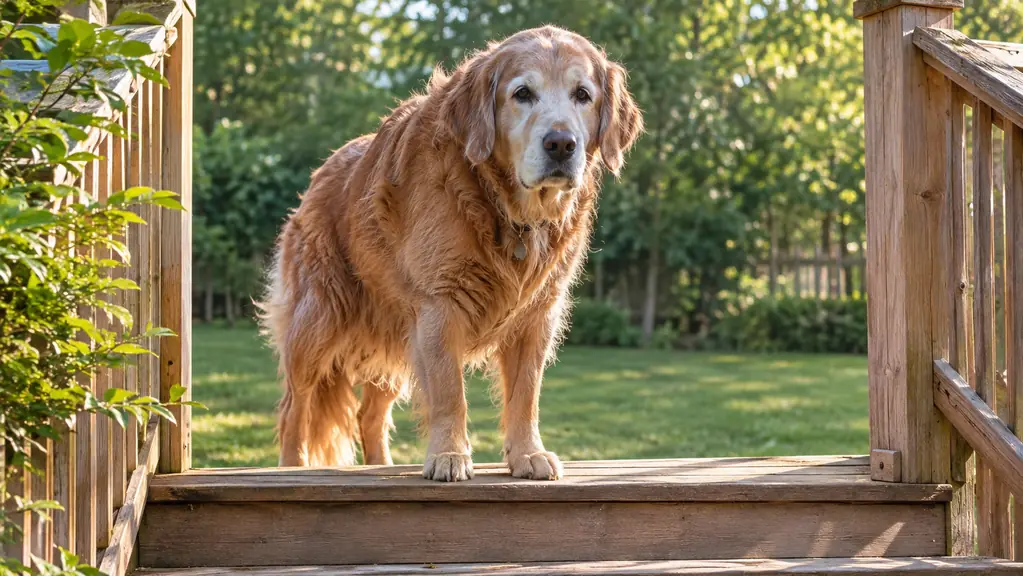
I want to be careful here, because this is the part where supplement stories turn into fairy tales. Biscuit started Cosequin right after the arthritis diagnosis, at our vet's suggestion. For the first month I saw nothing I could point to. Around week six she stopped needing a second try at the first step off the back deck. That was the entire change. Not a sprint across the yard. Not a different dog. One fewer hesitation on three wooden steps.
I kept a note on the refrigerator for the first four months, which sounds more organized than it was. It was a magnet and a grocery list pad, and each morning I wrote one word: stiff, or medium, or fine. Twenty-two days in, the pad said stiff almost every morning. By day forty-one there were three fines in a row and I stood in the kitchen and read them twice. I am not presenting that as evidence of anything, because a cold snap can move those words around as easily as a chew can. But it is what I have, and it is more than I had before I started writing it down.
Since then the routine has grown up around her. She wears non-slip socks on the hardwood in the living room and the hallway most mornings, because a sliding dog braces and bracing hurts. There is a sling on a hook by the back door for the deck steps on bad mornings and for lifting her back end into the Outback. There is a folding ramp for the hatch on vet days. The Cosequin did not replace any of it. It sits in the same toolbox, and I would not want to give up any single piece.
She still has stiff days. Cold, damp weeks are worse, and there were two mornings in February when she looked at those three steps like they were a staircase in a lighthouse. That is an honest report from an honest household and I would rather hand it to you than tell you a supplement fixed everything. If your vet has prescribed something for pain or inflammation, that is a separate conversation and it is not mine to have. Ask them.
Around week six she stopped needing a second try at the first step off the deck. That was the whole change, and it was enough.
The Label Detail Most People Skip
When you compare two bags in a store aisle, look for one thing. Does the label give the ingredient a name beyond the plain word? The FCHG49 and TRH122 designations on the Cosequin panel are the reason I stopped shopping around. They mean the glucosamine hydrochloride and the sodium chondroitin sulfate were identified and assayed as specific materials, not scooped out of an unmarked drum. A bag that says only glucosamine HCl is not lying to you. It is simply not telling you anything you can check.
Nutramax Laboratories has been in pet health for over 25 years, according to the listing, and Cosequin is the product our vet's office brought up first. That is not proof it will work for your dog. Nothing on a bag is proof. It is a reason to start there instead of guessing, and for me it settled the question well enough that I stopped looking.
A practical note on switching, since I did try the other one. When I opened the warehouse-club container, I gave it for five days alongside nothing else so I could watch her. She ate it, which surprised me, and she was fine on it. Then I went back to the Cosequin simply because I had already done the reading and I did not want to be running a comparison test on an arthritic twelve-year-old in the middle of winter. If your dog is younger and steadier, that five-day approach is a reasonable way to find out whether a chew agrees with her stomach before you commit to a large container of anything.
Who Should Buy Which
Buy Cosequin if your dog is already diagnosed, if your vet has mentioned it by name, and if your dog is big enough that weight-based directions actually mean something. Buy it if you have one dog and the difference per month is a number you can live with, because then the testing Nutramax Laboratories does on its raw materials and the named ingredients are what you are paying for, and you are getting them. Buy it if your dog takes a soft chew without a fuss, the way Biscuit does, since the best supplement in the world does nothing sitting in the bowl.
Buy the generic if your dog is young and stiff after a hard run and you want a low-cost place to start while you save up for a proper exam. Buy it if the household arithmetic matters more than the panel. Buy it if your dog turns her nose up at soft chews and you need to try three textures before you find one she will eat. Do not buy either one and skip the vet. That is the only piece of advice in this article I would argue about.
Eighteen months in, the bag in my pantry is still the same one
One or two soft chews with breakfast, eighteen months of mornings that got a little easier, and a dog who still needs her sling on the wet days. That is the whole report. Talk to your vet about your dog's dose before you start.
Amazon Check Today's Price on Amazon →